
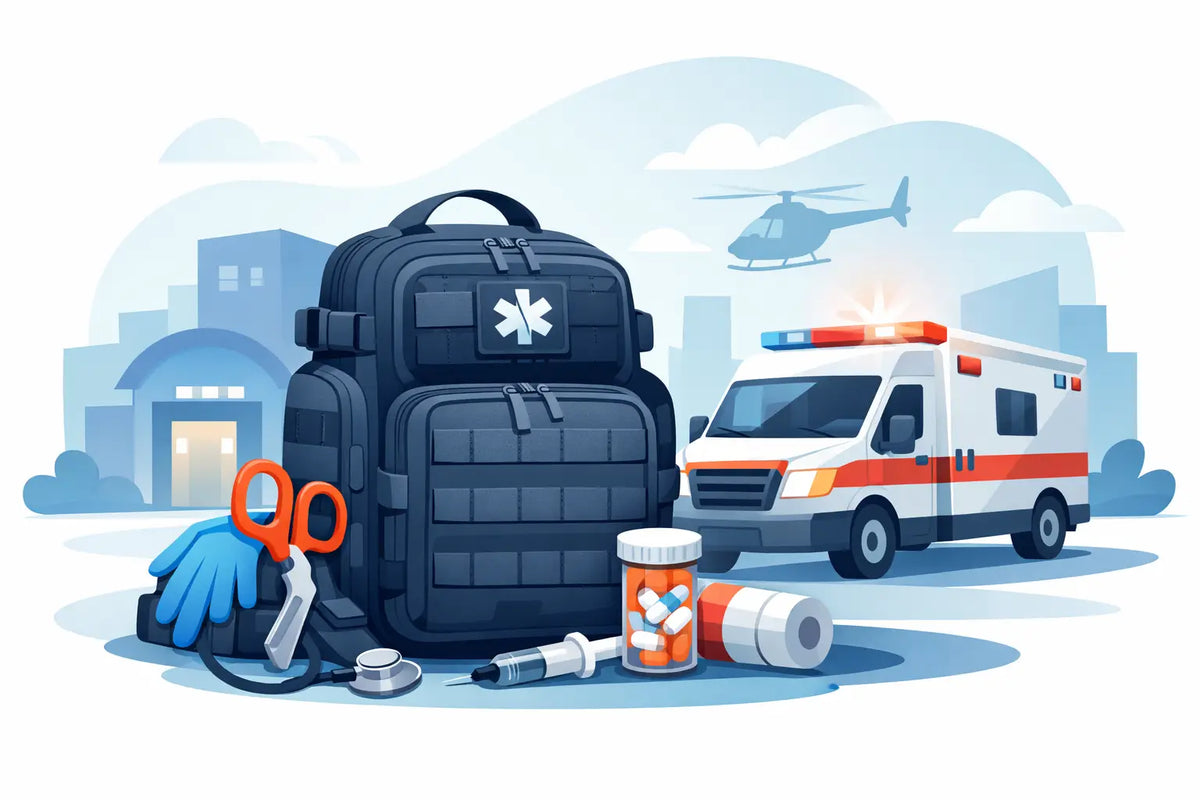
A bag that looks squared away in the station can become a liability in a dark stairwell, on a highway shoulder, or halfway across a muddy field. The best tactical bag for paramedics is not the biggest pack or the one with the most webbing. It is the one that keeps critical gear protected, organized, and immediately reachable when seconds are expensive.
Paramedics work in motion. You move from rig to scene, scene to patient, patient to transport, then back again. Your bag has to take abuse, stay comfortable under a real load, and give you a repeatable system for finding what you need without digging through a black hole of loose supplies.
What Makes a Tactical Bag Work for EMS
A tactical bag earns its place on shift when its design supports your workflow instead of forcing you to adapt to it. That starts with access. A main compartment should open wide enough to expose contents clearly, rather than offering a narrow top opening that turns every item retrieval into a search.
For many paramedics, a clamshell or wide-opening pack is the right call. It lets you lay the bag down, open it fully, and see modules, dressings, airway supplies, or personal protective equipment at a glance. A top-loading rucksack can carry plenty, but it often makes sense only when the load is divided into clearly marked pouches and you are not regularly reaching for items from the bottom.
The next requirement is structure. Loose pockets sound flexible until the bag is bouncing around in a unit or gets carried up three flights of stairs. Look for internal sleeves, zippered compartments, and enough separation to build a consistent layout. The goal is not to create more places to hide equipment. The goal is to give every item a known location.
Durability matters because gear failure is not an option. Strong stitching at stress points, abrasion-resistant fabric, dependable zippers, and reinforced shoulder straps all pay off after months of vehicle floors, concrete, gravel, rain, and repeated loading. Tactical styling alone does not make a pack field-ready. Construction does.
Choosing the Right Capacity for Your Role
Capacity should match what you actually carry, not what you might be able to stuff into a bag. An overloaded pack slows access, strains the zipper line, and punishes your back. A bag that is too small creates its own problem when essential gear spills into pockets, the cab, or a second bag that gets left behind.
For a personal shift bag, a compact tactical sling or daypack may be enough. It can hold food, water, a light layer, charger, notebook, spare uniform items, eye protection, and personal EDC without taking over the rig. This is not your medical kit. It is the bag that keeps you prepared through a long tour.
A medium tactical backpack is often the most versatile option for paramedics who need a work bag that can handle personal items plus selected medical gear, training equipment, or a backup loadout. It carries well over distance and leaves both hands free when you need to manage doors, railings, equipment, or a patient.
A larger rucksack makes sense for event medicine, tactical EMS, disaster response, wilderness operations, standby assignments, or any role where you may be away from the unit and carrying a longer-duration supply load. The trade-off is obvious: more volume means more potential weight. If a bag routinely tips the scale into an uncomfortable carry, reduce the load or move heavier equipment into a dedicated response kit.
The Best Tactical Bag for Paramedics Has Fast Access
In a pressure situation, access beats raw storage. The right bag lets you open one compartment and retrieve the item without moving five others. That principle should guide every feature choice.
Exterior quick-access pockets are useful for items you reach for often but do not want loose in your pants pockets. Think gloves, trauma shears, a flashlight, a penlight, tape, spare batteries, or a small notebook. Keep these pockets purposeful. If every outside pocket becomes a junk drawer, you lose the speed they were meant to provide.
Inside the pack, use color-coded or clearly labeled pouches to separate categories. A red pouch might be trauma, blue may be airway, and a clear pouch may hold PPE. The exact system is up to your service protocols and personal habits. Consistency is what matters. If your partner has to grab the bag, a simple visual system gives them a fighting chance of finding the right item quickly.
Avoid relying on tiny organizer slots for critical equipment. They work well for pens, forceps, batteries, and small tools, but they can become frustrating when gloves are on or visibility is poor. Larger pull tabs, easy-grab pouch handles, and compartments that open fully are more practical in the field.
MOLLE Is Useful When It Solves a Real Problem
MOLLE and PALS webbing are valuable because they let you add capability where you need it. An exterior pouch can hold a radio accessory, glove refill, tourniquet, water bottle, or compact utility kit. It also allows you to build a bag around the assignment rather than buying a different bag for every use case.
That flexibility has a limit. Every added pouch increases snag points, catches on seat belts and door frames, and can throw off the balance of the load. A bag covered in accessories may look mission ready, but a clean profile is often better for ambulance work and crowded scenes.
Use MOLLE for equipment that needs its own protected space or must be reached without opening the main compartment. If an item is rarely used, keep it inside. If it changes the bag's center of gravity when attached externally, reconsider the placement.
Carry Comfort Is a Safety Issue
A loaded paramedic bag is not carried across a showroom floor. It goes through parking lots, apartment buildings, ditches, stairwells, and uneven terrain. Shoulder straps should be padded and adjustable enough to keep the load close to your back. A sternum strap adds rock-solid stability when you are moving fast or climbing.
Back-panel padding helps, but ventilation and fit matter more than excessive cushioning. The bag should sit high enough that it does not pull at your lower back, while still allowing you to move naturally in uniform or outerwear. If you regularly carry a heavy load, choose a pack with a supportive waist belt or at least the option to add one.
Test the bag at working weight before committing to a layout. Put in the gear you expect to carry, walk up stairs, get in and out of a vehicle, and practice pulling key items. A comfortable empty bag can reveal major flaws once it carries water, PPE, electronics, and response equipment.
Weather Protection and Shift-Ready Details
Your gear bag does not need to be fully waterproof for every assignment, but it should handle rain, wet pavement, and incidental spills without soaking through immediately. Durable fabric, coated interiors, protected zipper paths, and raised bottom panels help keep contents cleaner and drier.
Hydration is another practical consideration. A pack with a dedicated bladder sleeve and a tube pass-through can support long standbys, special events, training days, or outdoor operations. For a standard ambulance shift, a bottle pocket may be more convenient. Choose the setup you will actually use.
Do not overlook identification. A subdued name tape, reflective marker, or clearly visible EMS patch can help distinguish your bag from other tactical packs at a staging area. Keep it professional and easy to recognize without advertising every item inside.
Build a Bag You Can Run Without Thinking
The best setup is one you can use on a bad night when you are tired, wet, and working under pressure. Load the bag the same way every time. Return items to the same location after every call. Inspect zippers, straps, and attachment points before they become a failure point.
Shadow Gear USA bags are built around the kind of modular storage, durable construction, and expandable carry options that make sense for demanding work. Still, the right pack depends on your assignment, agency equipment, and whether you need a personal shift bag, a response loadout, or a longer-duration field pack.
Choose a bag that carries only what supports the mission, then train with it until opening the right compartment feels automatic. When the call is chaotic, that familiar layout can make your next move faster and more controlled.
Shadow Gear Picks
- Shuttle 4L Convertible Sling Pack: five pockets, left- or right-shoulder carry and a quick-release top buckle.
- Summit XL 52L Tactical MOLLE Trekking Rucksack: 52L for multi-day trips, with a 17-inch laptop pocket, hydration port and adjustable chest and waist straps.
- Traverse 22 59L Tactical MOLLE Duffel Bag: ten compartments and adjustable side compression straps that cinch it down or open it up.
Every Shadow Gear bag is built from water-resistant 600D polyester and backed by the Shadow Gear Lifetime Warranty. 2% of net product sales go to Folds of Honor.
0 comments