
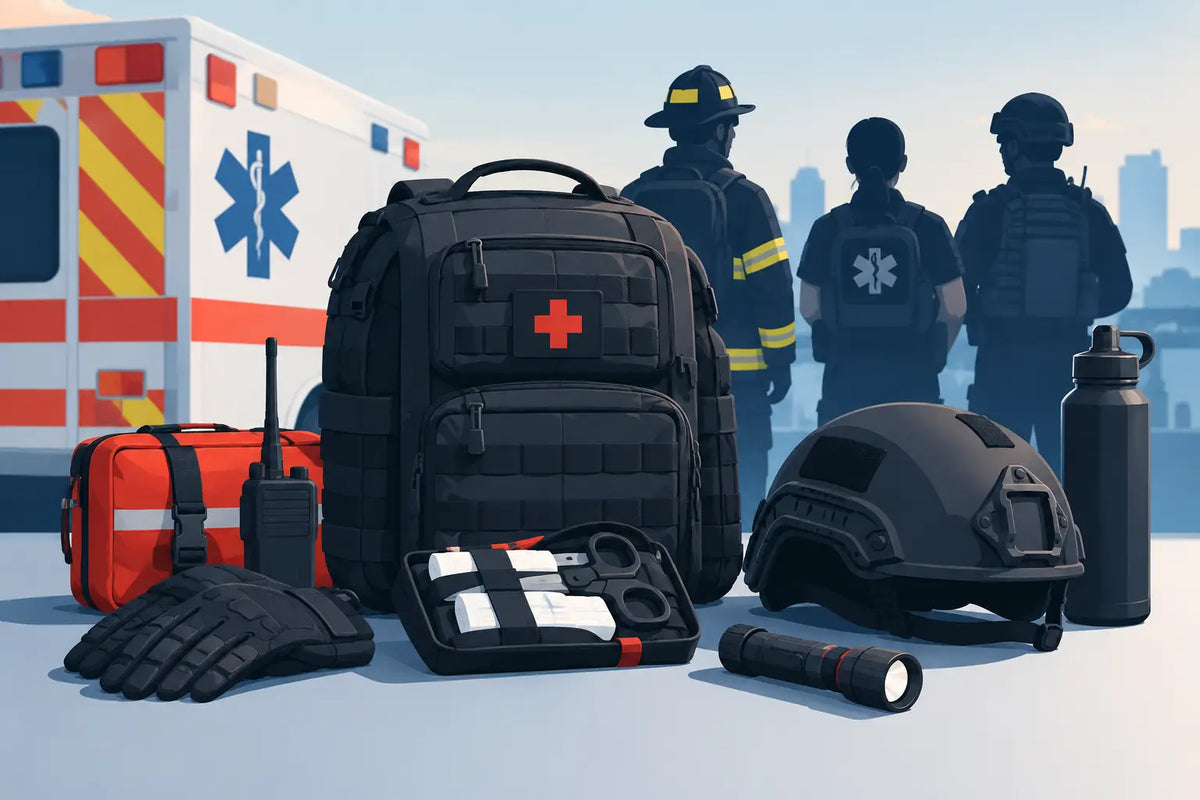
A bag becomes a problem the moment you have to dig through it. On a dark roadside, at a crowded event, or halfway through a long shift, the gear you need should be where your hands expect it to be. That is the standard behind effective first responder loadouts: not more equipment for the sake of it, but organized, durable carry systems that support fast decisions under pressure.
The right loadout depends on your role, agency requirements, assignment, and scope of practice. A firefighter, paramedic, security professional, search-and-rescue volunteer, and off-duty preparedness-minded civilian will not carry the same tools. They do share one need: gear that stays secure, carries comfortably, and gives immediate access to the essentials without creating extra weight or confusion.
First Responder Loadouts Start With the Mission
Before choosing a rucksack, sling, chest pack, or pouch, define what the bag must do on its worst day. Is it a shift bag that stays in a vehicle? A grab-and-go kit for moving from staging to a scene? An event-response setup carried for hours? Or a compact personal bag that supports your issued equipment?
That answer determines capacity. A large pack makes sense when you need spare layers, food, hydration, documentation, PPE, charging gear, and role-specific supplies for an extended shift. It becomes a liability when your work requires frequent movement through tight spaces, crowds, vehicles, or stairwells. Bigger is not always better. The best capacity is the amount you can carry, control, and access without sacrificing mobility.
Start by separating issued medical or operational equipment from personal sustainment gear. Department policies, local protocols, and your training should govern what medical items or response tools belong in your kit. Your bag’s job is to protect and organize approved equipment, not replace policy or turn every pack into an unplanned supply closet.
A practical loadout also has a clear purpose for every item. If a tool does not support your assignment, keep it in vehicle storage or leave it out. Excess gear adds fatigue, slows access, and makes accountability harder at the end of a shift.
Build Access Around Seconds, Not Storage Space
A bag can have plenty of liters and still fail the field test. The real question is whether you can reach the right item with limited visibility, gloved hands, stress, and no time to unpack your entire load.
Set up your first responder loadouts in layers. The most time-sensitive and frequently used items belong in exterior or top-access areas. Secondary items can sit in the main compartment, where they remain protected but still visible when opened. Low-priority sustainment supplies, backups, and personal items belong deepest in the pack.
For most professionals, the exterior should stay clean and purposeful. A packed-out front panel may look prepared, but loose or poorly secured attachments can snag on vehicle interiors, door frames, brush, and other equipment. Use exterior storage for items you genuinely need fast, and keep the rest contained.
Inside the bag, give each category its own home. Color-coded pouches, labeled organizers, or dedicated internal pockets reduce the chance of grabbing the wrong item when conditions get loud and chaotic. The method matters less than consistency. If your gloves are always in the same location, they should stay there after every reset.
A useful four-zone approach is:
- Immediate-access gear for PPE, a light, communications accessories, and other frequently needed items
- Role-specific equipment organized according to your approved protocols and assignment
- Sustainment items such as water, food, weather layers, power banks, and hygiene supplies
- Personal and administrative items, including identification, notebooks, chargers, and spare clothing
Choose a Platform That Matches How You Move
A full-size tactical backpack is the workhorse for long shifts, vehicle-based response, training days, and assignments that demand extra layers and extended sustainment. Look for wide shoulder straps, a stable back panel, compression straps, and enough internal structure to prevent your equipment from becoming one heavy pile at the bottom.
A compact assault pack or daypack is better for mobility. It carries the essentials without pulling you off balance when moving quickly or working in confined areas. This is often the stronger choice for event teams, range staff, security personnel, and anyone who needs a low-profile personal support bag rather than a rolling supply room.
Slings and chest packs earn their place when access matters more than bulk. They can keep small essentials close while seated in a vehicle, moving through a crowd, or wearing a larger pack. Their trade-off is limited capacity and uneven weight if overloaded. Keep them light, mission-specific, and easy to remove when needed.
Duffel bags are valuable for station lockers, vehicle organization, deployments, and spare gear, but they are rarely the best choice for immediate field carry. Use them as a base of support rather than trying to make one oversized duffel serve every purpose.
Shadow Gear USA designs its packs around this kind of multipurpose reality: a load-carrying platform should perform during demanding work, then remain useful for training, travel, and weekend use without feeling like dead weight in your closet.
Use MOLLE for Purposeful Modularity
MOLLE and PALS webbing give you options, not a requirement to attach something to every available row. The benefit is adaptability. You can add a pouch for a changing assignment, secure a small utility kit where it is easiest to reach, or shift accessories as your work evolves.
The downside is bulk. Every added pouch changes the bag’s profile, weight distribution, and snag potential. Before attaching an accessory, ask whether it improves access enough to justify the extra size. If it holds something you only use once a day, it probably belongs inside.
Attachment quality matters, too. A pouch that swings, shifts, or pulls loose is not mission ready. Thread straps correctly, secure loose ends, and check the setup after a day of movement. Compression straps should stabilize the load, not merely cinch down a disorganized bag.
Hydration routing is another practical feature. A pass-through port for a hydration tube can keep water accessible without consuming your hands or forcing you to stop and unpack. Route the tube tightly and deliberately so it does not interfere with straps, zippers, or quick removal of the pack.
Manage Weight Before It Manages You
A well-built bag cannot compensate for poor load placement. Put dense, heavy items close to your back and near the middle of the pack. This keeps the center of gravity stable and reduces the feeling that the load is pulling you backward every time you climb, bend, or move quickly.
Keep lighter items toward the outside and use compression straps to prevent internal shifting. If the contents move when you turn, the bag will work against you all day. A stable load protects your shoulders and back while helping you maintain balance in uneven terrain, stairwells, and cramped work spaces.
Fit is part of readiness. Adjust shoulder straps so the pack rides high and close without restricting breathing or arm movement. A sternum strap can reduce strap drift during active movement, while a waist belt helps transfer weight on longer carries. The right setup depends on your body size, armor or outerwear, and whether you will wear the bag for minutes or hours.
Do not ignore weather exposure. Wet gear, spare gloves, paperwork, and electronics can turn a long shift into a mess if they are not separated or protected. Use internal organization to keep dry items dry, and carry a simple method for isolating contaminated or wet equipment according to your workplace procedures.
Reset the Loadout After Every Shift
The strongest loadout routine happens after the call, not during it. Refill consumables, remove trash, inspect zippers and buckles, recharge power sources, and return every item to its assigned location. A bag that is thrown in the vehicle after a hard day will eventually fail you through disorganization, even if the fabric and stitching remain intact.
Train with the configuration you actually carry. Open every zipper with gloves. Reach for key items in low light. Put the bag on while wearing the outerwear you use in the field. If an attachment catches, a zipper is blocked, or a pouch lands in the wrong place, fix it before the next shift.
Your loadout should feel boring when you need it most. Nothing should surprise you, nothing should wander, and nothing should require a scavenger hunt. Build it with discipline, test it under realistic conditions, and let dependable organization do its job when the pressure rises.
Shadow Gear Picks
- Transit 35L Commuter Laptop Backpack: a padded sleeve for up to a 17-inch laptop, a tablet sleeve, and MOLLE on the front and sides.
- Traverse 18 42L Tactical MOLLE Duffel Bag: seven compartments, side compression pockets and a detachable shoulder strap.
- Guard 4L Tactical Chest Pack: worn across the chest or crossbody, and rotates forward in seconds so you can reach gear without taking it off.
Every Shadow Gear bag is built from water-resistant 600D polyester and backed by the Shadow Gear Lifetime Warranty. 2% of net product sales go to Folds of Honor.
0 comments