
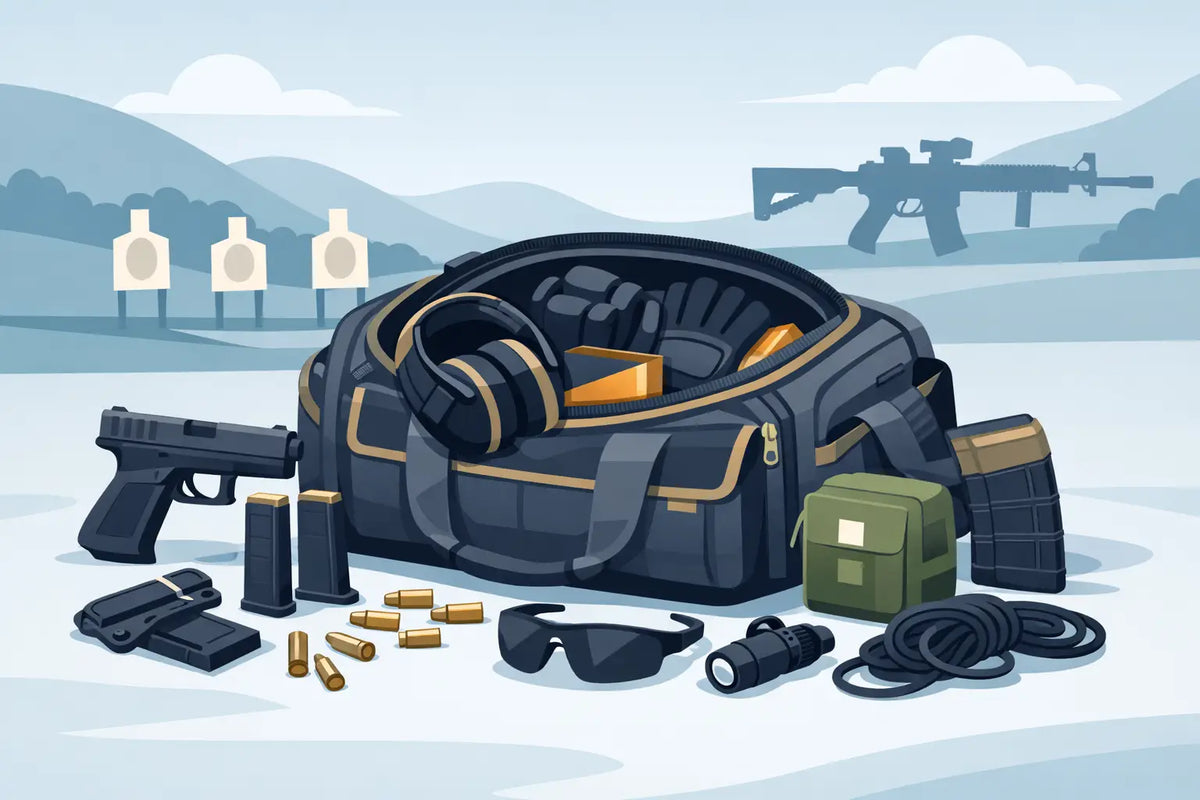
A range day can fall apart fast when the one item you need is buried under loose ammo, a half-empty water bottle, and three different pairs of gloves. The right range bag essentials keep your attention on safe gun handling, deliberate reps, and the training objective - not on hunting through clutter between strings.
A good range bag is not just a place to throw gear. It is a working loadout. It should protect critical equipment, keep ammunition separated and secure, and put medical supplies and eye protection where you can reach them without thinking. Whether you are zeroing a rifle, running pistol drills, attending a class, or spending a long day at an outdoor range, organization buys you time and reduces avoidable mistakes.
Range Bag Essentials That Earn Their Space
Start with the equipment that supports safe, uninterrupted training. Hearing and eye protection belong at the top of the loadout, not at the bottom of a main compartment. Pack a primary set and, if space allows, a backup pair of foam earplugs. Electronic earmuffs are useful when you need to hear range commands and coaching, but batteries fail. Foam plugs weigh almost nothing and keep a dead battery from ending your day.
Clear ballistic-rated eye protection is the baseline, especially for indoor ranges or low-light conditions. If you train outdoors, a second lens option can be worth carrying. Bright sun, changing weather, and dusty bays can make one lens color a poor fit for every situation.
Your ammunition needs its own system. Factory boxes work for low-volume trips, but they take up room, tear open, and make it harder to see what you brought. Labeled ammo boxes, cartridges in their original packaging, or dedicated pouches help you separate calibers and track round counts. Never rely on memory when multiple firearms or calibers are in the same bag.
A basic training loadout should also include:
- Magazines or speed loaders appropriate to the firearms you plan to use
- Chamber flags and any range-required safety equipment
- Targets, target pasters, a marker, and a staple gun or clips if the range does not provide them
- Government-issued identification, membership card, class paperwork, and any required permits
Build Around Safety, Not Convenience
A dedicated first-aid kit belongs in every range bag, but it helps to be honest about its purpose. A few adhesive bandages and pain relievers are useful for ordinary cuts, headaches, and blisters. They are not a substitute for trauma supplies or training.
For remote outdoor ranges, classes, or any environment where emergency response may be delayed, carry a clearly marked trauma kit that you understand how to use. Many experienced shooters include a tourniquet, pressure dressing, hemostatic gauze, chest seals, trauma shears, and gloves. Exact contents depend on your training, local conditions, and medical needs. The point is simple: emergency gear only works when it is accessible, complete, and familiar.
Keep that kit in an external pouch, a dedicated high-visibility pocket, or a consistently marked location. Do not bury it below ammunition. If you train with friends, make sure everyone knows where it is. A range bag should support the person carrying it, but it should also make sense to someone trying to help under pressure.
Water is another safety item that gets treated like an afterthought. Heat, hearing protection, sunlight, and the mental load of training can wear you down faster than expected. Bring more water than you think you need, particularly during hot-weather range sessions. A bag with a hydration pass-through can keep a drinking tube routed cleanly while the reservoir stays protected inside the pack.
Sunscreen, insect repellent, a brimmed hat, and a light rain layer may sound more like hiking gear than shooting gear. At an outdoor range, they can be the difference between staying focused and calling it early. The best loadout reflects the environment, not just the firearm.
Tools for Keeping the Training Moving
Small failures create big delays. A loose optic mount, a stubborn takedown pin, a dead red-dot battery, or a dirty chamber can interrupt an entire session. You do not need a full workbench in your bag, but you do need enough equipment to solve routine problems safely.
A compact tool kit with the correct bits for your firearm and optic setup is a strong starting point. Add a multitool, a small flashlight or headlamp, spare batteries, a lens cloth, and a small bottle of lubricant. If you run optics, confirm your battery type before packing spares. Tossing in random coin cells is not a plan.
A bore snake or compact cleaning kit is useful after a dusty range day or when a firearm needs basic attention. It is not always necessary for a short indoor session, so this is one area where the loadout depends on the mission. Carrying less can be smart when you are walking from the parking lot to a clean, well-equipped indoor lane. For a full-day field course, more self-sufficiency makes sense.
Bring a notebook and pen, too. Record zero adjustments, ammunition performance, malfunctions, drill times, and lessons from an instructor. Training that never gets tracked is easy to repeat but hard to improve. A waterproof notepad is especially useful when weather, sweat, or dusty benches are part of the equation.
Choose a Bag That Can Take the Load
The bag itself matters because range gear is dense, abrasive, and often dirty. Ammunition adds weight quickly. Metal magazines chew through thin liners. A flimsy zipper or narrow shoulder strap becomes a problem long before the trip home.
Look for durable fabric, reinforced stitching, dependable zippers, and a base that can handle being set on gravel, concrete, or wet ground. A rigid range bag offers excellent access from a bench, while a backpack or rucksack is often better for carrying gear across a large property or to a training bay. Neither is automatically better. Match the bag to how far you carry it and how much equipment you run.
Compartment layout deserves more attention than total capacity. A large empty cavity can become a black hole. Separate spaces for ammunition, eye and ear protection, tools, medical gear, and personal items make setup faster and cleanup more controlled. Exterior pockets are ideal for items you need immediately, while internal compartments protect smaller gear from impact and weather.
MOLLE/PALS webbing adds real value when it is used with purpose. It lets you mount a trauma pouch, utility pouch, water-bottle holder, or dump pouch where it makes sense for your setup. The trade-off is bulk. Do not cover every panel because you can. Extra pouches can snag, add weight, and make a bag harder to stow in a vehicle.
For shooters who move between range days, work, travel, and outdoor weekends, a modular pack can earn its keep beyond the firing line. Shadow Gear USA designs its packs around that kind of adaptable carry, with rugged storage, expandable capacity, MOLLE options, and hydration ports on select packs. The best bag is one that stays organized when the mission changes.
Pack It in a Repeatable Order
A disciplined packing order prevents forgotten gear. Put medical equipment in the same location every time. Keep documents flat and protected. Store ammunition in a dedicated compartment, away from food and loose personal items. Place eye and ear protection near the top so you can gear up before handling firearms at the line.
After training, do not simply throw everything back in and promise to deal with it later. Remove trash, inspect for loose rounds, wipe down dirty gear, and restock what you used. Check batteries, replenish water, and make a note of supplies that need replacement. That ten-minute reset turns your next departure into a grab-and-go operation instead of a last-minute scramble.
Your range bag should be built for the way you actually train, not for a photo or a checklist contest. Carry what supports safe, focused work. Keep it organized enough to find under pressure, durable enough to survive hard use, and light enough that you will bring it every time. When the whistle blows or the timer starts, your gear should already be doing its job.
Shadow Gear Picks
- Traverse 18 42L Tactical MOLLE Duffel Bag: seven compartments, side compression pockets and a detachable shoulder strap.
- Traverse 22 59L Tactical MOLLE Duffel Bag: ten compartments and adjustable side compression straps that cinch it down or open it up.
- Summit 28L Tactical MOLLE Hiking Daypack: 28L with two full-zip compartments, a hydration port and MOLLE on the front, sides and bottom.
Every Shadow Gear bag is built from water-resistant 600D polyester and backed by the Shadow Gear Lifetime Warranty. 2% of net product sales go to Folds of Honor.
0 comments