
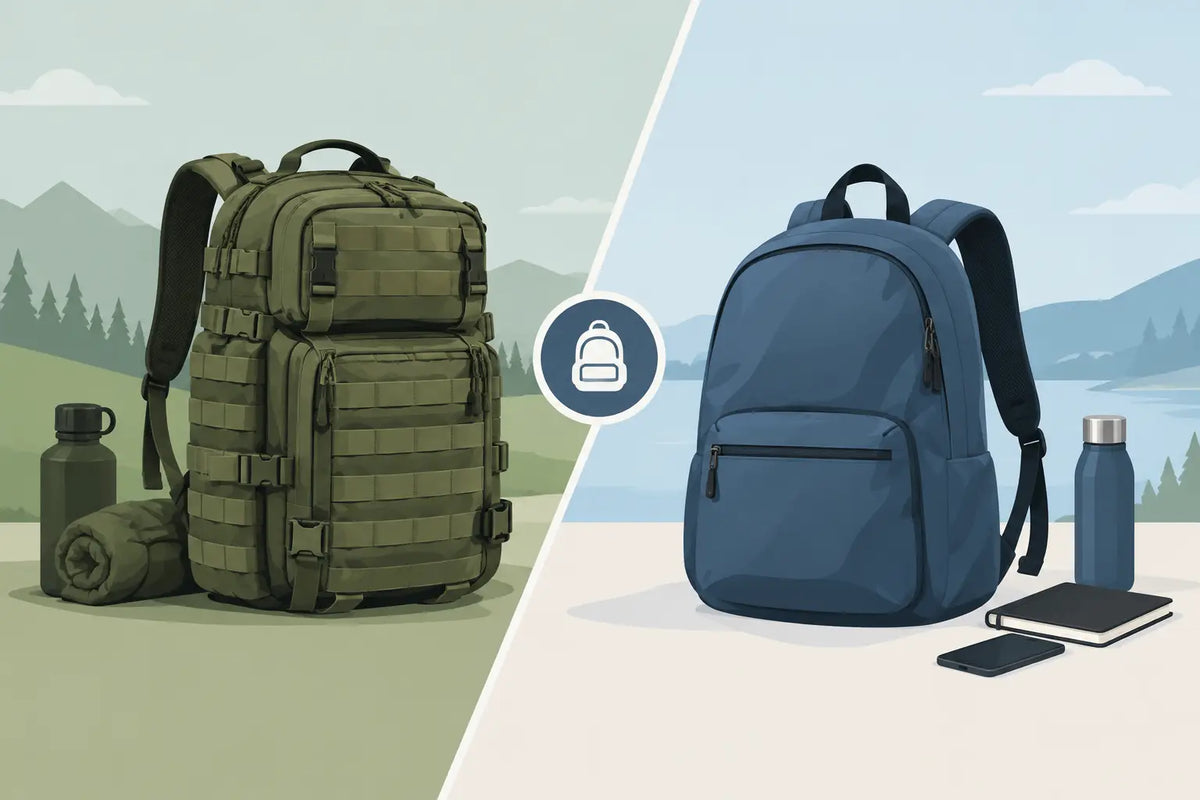
A bag that works fine for a quick commute can become dead weight when you add water, layers, medical gear, tools, and a full day’s essentials. That is where the assault pack versus daypack decision gets real. Both are built to carry more than your pockets can handle, but they solve different load-carrying problems. Choose the wrong one, and you may end up fighting poor access, wasted space, or a shifting load when you need stability most.
Assault Pack Versus Daypack: The Real Difference
An assault pack is a compact tactical rucksack designed around mission-specific carry. In military use, it traditionally supports a short-duration operation or movement away from a larger sustainment pack. For civilian users, that translates well to range days, duty shifts, field training, emergency preparedness, hunting, overnights, and hard-use travel. It is built to carry gear that needs a defined place and may need to be reached fast.
A daypack is a broader category. It is usually made for a day hike, commute, school, gym run, or casual travel. Daypacks range from simple 15-liter bags to technical hiking packs with supportive frames, but most prioritize low weight and general comfort over tactical organization and external expansion.
The line is not always sharp. A well-built tactical daypack can work as an assault pack, while a streamlined assault pack can be an excellent EDC bag. The difference comes down to design priorities: an assault pack emphasizes modularity, compartmentalized gear, durable materials, and load control. A daypack usually emphasizes simple storage, lower profile carry, and comfort with lighter, less specialized loads.
Capacity Is More Than a Liter Number
Do not choose solely by capacity. Two packs with the same listed volume can carry very differently because pockets, panel layout, compression straps, and external webbing change how usable that space feels.
Most daypacks are at their best when carrying a laptop, lunch, water bottle, light jacket, charger, notebook, and a few personal items. They are efficient when the load is predictable and relatively clean. Toss in bulky work gloves, a trauma kit, eye protection, spare batteries, rain gear, and hydration, however, and a basic main compartment can turn into a gear pile.
An assault pack is designed to keep that pile under control. Multiple compartments separate critical items from bulkier layers. Admin panels keep smaller equipment from settling at the bottom. Compression straps cinch down a partial load so it does not swing or slap against your back. External MOLLE/PALS webbing gives you the option to add a pouch, utility sleeve, or specialized attachment without replacing the entire pack.
That expandability is useful, but it is not free. Every added pouch increases weight, width, and snag risk. If your normal load is a laptop and a hoodie, a fully built-out tactical bag may be more pack than you need. Modular capability is strongest when it supports a real task, not when it becomes decoration.
Carry Comfort Depends on the Load and the Distance
A daypack often feels better right out of the gate because it is lighter, less structured, and designed for easy all-day use. For city walking, airports, campus, or a short trail, that simplicity has value. Less bag means less bulk in tight spaces and less temptation to overpack.
Assault packs earn their keep as the load gets denser. Padded shoulder straps, sternum straps, compression systems, and more structured back panels help hold equipment close to your center of mass. That rock-solid stability matters when you are moving over uneven ground, climbing in and out of a vehicle, working around a job site, or carrying a pack through a long range day.
Fit still matters more than labels. A poorly adjusted assault pack can punish your shoulders, and a quality daypack can carry a modest load comfortably for miles. Load the bag the way you actually plan to use it, tighten the shoulder straps, set the sternum strap, and walk with it for more than five minutes. The pack should stay close without restricting breathing or forcing the weight onto your lower back.
Hydration is another dividing line. Many tactical packs include a dedicated hydration sleeve and a pass-through port for a drinking tube. That is a practical advantage for long movements, training, travel days, or any job where stopping to dig for a water bottle is not ideal.
Organization: Fast Access or Simple Access?
A conventional daypack keeps organization simple. One main compartment, a front pocket, and perhaps a padded laptop sleeve cover the basics. This is easy to live with when your items are ordinary and you do not need a fixed setup. There are fewer zippers to manage and fewer places to forget something.
An assault pack is better when gear has consequences. A flashlight, tourniquet, radio accessory, batteries, work gloves, maps, tools, and rain shell should not all compete for the same open compartment. Dedicated sections let you build a repeatable layout, so your hands know where to go before your eyes do.
That repeatability pays off under pressure, but it requires discipline. An organized pack only stays organized if you return items to the same location. If you tend to dump gear loosely into a bag and sort it later, a straightforward daypack may serve you better. The right pack should support your habits, not demand a personality change.
External webbing also deserves a realistic look. MOLLE/PALS is excellent for securing compatible pouches and tailoring a loadout by task. A medic can stage medical supplies differently from a tradesperson carrying hand tools or a traveler carrying an extra water pouch. But webbing adds a tactical visual profile that may not fit every workplace, office, or crowded transit route. A subdued color and a cleaner exterior can make an assault-style pack easier to use every day.
Match the Pack to the Mission
For commuting, a daypack is usually the cleaner choice if you carry electronics, a meal, and a few personal items. Look for a protective laptop sleeve, enough internal separation to prevent cable clutter, and straps that stay comfortable over a full commute. A tactical pack makes more sense when your commute also includes gym gear, field equipment, work PPE, or a change of clothes.
For range days and training, the assault pack has the edge. It handles dense, awkward items, supports a hydration bladder, and lets you separate eye and ear protection, cleaning equipment, tools, snacks, rain layers, and first-aid supplies. Compression straps keep the load from shifting when the bag is not full.
For hiking, the answer depends on distance and weight. A lightweight daypack is hard to beat for a few hours on established trails. Once the load includes substantial water, insulation layers, navigation gear, emergency equipment, or a heavy meal kit, an assault pack’s structure and modular layout become more useful. For long backcountry trips, a purpose-built hiking pack with an appropriate suspension system may still be the better tool.
For travel, consider how you move. A daypack slides easily under an airline seat and does not draw much attention. An assault pack offers better gear control for road trips, field travel, and one-bag weekends where clothing shares space with electronics, toiletries, and work equipment. Keep the exterior streamlined if you expect to move through crowded terminals or tight public spaces.
For preparedness, an assault pack is often the stronger platform because your loadout may change with the situation. You can stage a fixed core of water, light, medical supplies, communications, documents, and weather protection, then add task-specific gear when needed. Just avoid building a bag so heavy that it becomes difficult to carry beyond the front door.
Choose the Bag You Will Actually Carry
Pick a daypack when low weight, a clean profile, and basic everyday storage matter most. Pick an assault pack when organization, durability, hydration compatibility, and expandable capacity matter more. Neither choice is automatically tougher or smarter. The best option is the one that carries your real load comfortably, keeps essential gear accessible, and holds up when gear failure is not an option.
Before you commit, lay out a normal day’s equipment on the floor. Add the items you carry on your busiest day, not your lightest one. That honest loadout will tell you whether you need a simple daypack or a mission-ready assault pack built for work, weekend, and whatever comes next.
Shadow Gear Picks
- Summit 28L Tactical MOLLE Hiking Daypack: 28L with two full-zip compartments, a hydration port and MOLLE on the front, sides and bottom.
- Ridge 39L Tactical Backpack: a streamlined 39L everyday pack at just 1.5 lb, with full PALS webbing up front and a mesh bottle pocket on each side.
Every Shadow Gear bag is built from water-resistant 600D polyester and backed by the Shadow Gear Lifetime Warranty. 2% of net product sales go to Folds of Honor.
0 comments