
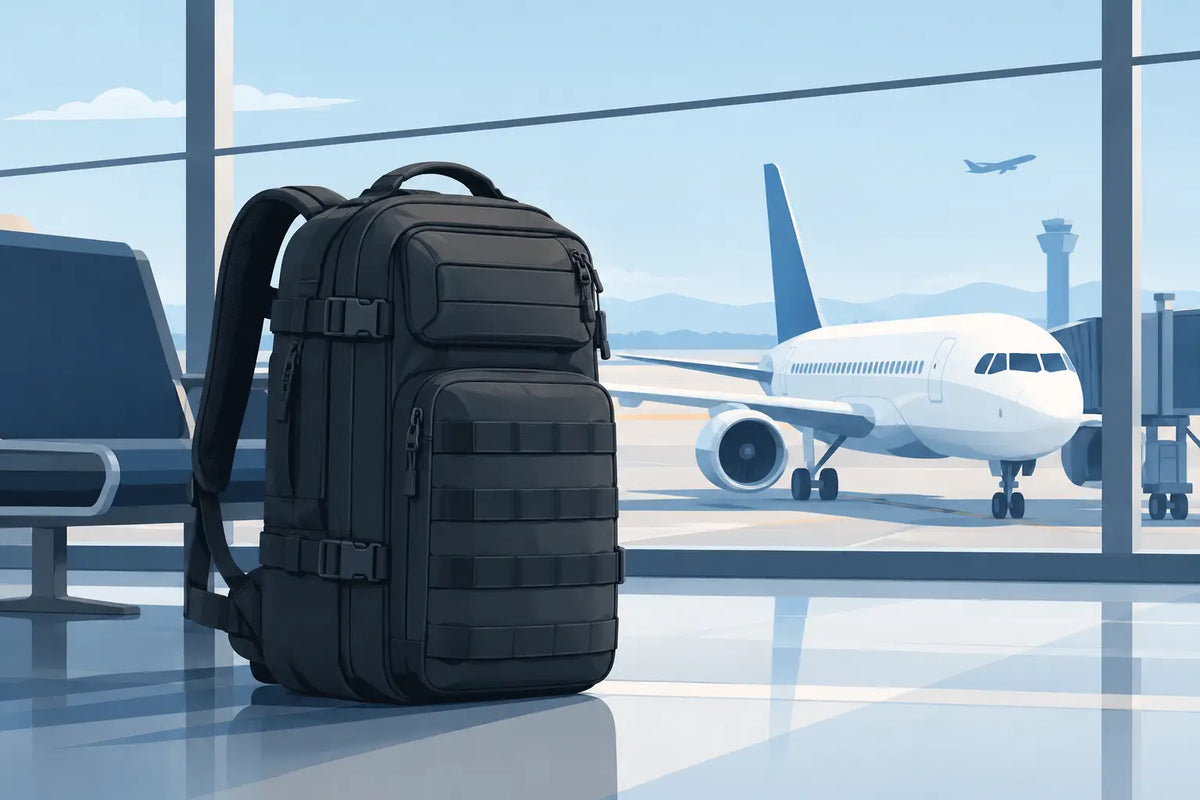
A delayed boarding call is a bad time to discover your bag is too tall for the sizer, too heavy for the overhead bin, or too disorganized to find a charger, ID, or medical kit. The best airline tactical bags bring mission-ready organization to travel without turning every checkpoint into a gear dump. They carry hard, access fast, and stay controlled from curb to gate.
For work travel, range weekends, family trips, and red-eye flights before a job site, the goal is not to bring the biggest pack possible. It is to carry what matters in a bag that fits the airline, protects essential equipment, and does not quit halfway through the trip.
What Makes an Airline Tactical Bag Different?
A standard travel backpack may hold clothes and a laptop. A tactical travel bag is built to manage a changing load with more discipline. Reinforced stitching, durable fabric, compression straps, compartmental storage, and MOLLE/PALS webbing give the user options when the mission changes.
That modularity matters when you travel with more than a change of clothes. One day the bag may hold a laptop, charger kit, documents, and work boots. The next, it may need room for trail layers, a hydration bladder, first-aid supplies, or range-related gear that is legal and properly packed for the trip.
The trade-off is clear: more compartments and webbing can add weight, bulk, and a more tactical appearance. If you fly often, favor a clean profile with organization inside the pack. Exterior MOLLE is valuable for attaching mission-specific pouches, but loose gear hanging from the outside can snag on seat arms, baggage belts, and other passengers.
Size Comes Before Features
The toughest bag in the world is no help if an airline requires you to check it unexpectedly. Carry-on dimensions, personal-item allowances, and weight limits vary by carrier, route, and fare class. Measure the bag when it is packed, not when it is lying flat and empty.
A pack listed as carry-on capable can still exceed the limit after you fill expandable compartments or attach external pouches. Compression straps help keep a load tight and prevent the bag from growing beyond its intended footprint. They also improve rock-solid stability when you are moving through terminals or running for a connection.
Carry-On Pack or Personal Item?
A carry-on tactical backpack is the right call when you need enough capacity for a few days of travel and want the bag in the overhead bin. A smaller sling, chest pack, or compact daypack can work as a personal item under the seat for the gear you cannot afford to lose access to: documents, medication, power bank, headphones, wallet, and a small hygiene kit.
This two-bag approach has a real advantage. If an airline gate-checks your larger bag, critical items remain with you. Keep the under-seat bag lean, though. A packed-out sling can become uncomfortable fast, especially during a long terminal walk.
Before departure, check the operating carrier's current size and weight rules. Do not assume the allowance from one domestic airline matches another, and be especially careful with regional aircraft where overhead space is limited.
Build the Loadout Around Access
A travel bag should not make you unpack your entire load just to reach one cable. Start with the items you will need before takeoff and place them in the most accessible pocket. That usually includes identification, boarding documents, phone, charging cable, battery pack, earbuds, and a pen.
Use the main compartment for soft goods and larger equipment. Packing cubes or simple zip pouches keep clothing, workout gear, and cables from mixing together. A dedicated laptop sleeve should keep electronics against the back panel, where the weight rides closer to your center of gravity and the device has more protection from impacts.
Keep a small admin pouch for the details that disappear at the bottom of unorganized bags: spare batteries, adapters, memory cards, lens cloths, earplugs, and medication. A bag with multiple pockets only helps when each pocket has a job.
Hydration pass-through ports are another practical feature. A hydration port can route a hydration tube during outdoor travel or training. For air travel, empty hydration bladders before security and refill after the checkpoint where permitted.
Use MOLLE With Discipline
MOLLE/PALS webbing gives airline tactical bags their expandable edge. It lets you secure compatible pouches for medical supplies, water, tools, or quick-access essentials instead of buying a different bag for every task. For the traveler who goes straight from the airport to the field, range, or trailhead, that flexibility is hard to beat.
But modular does not mean attach everything. Every external pouch changes the pack's dimensions and adds a snag point. A good rule is to keep the exterior low profile for the flight, then add only the pouches you need after landing. Store detachable pouches inside the main compartment while moving through the airport.
This is also a better security habit. A streamlined bag is easier to keep in sight, easier to place under a seat, and less likely to catch attention for the wrong reason. Tactical gear should be built to perform, not built to create unnecessary friction.
Pack for Security Without Losing Readiness
Airport security rules are not optional, and tactical styling does not change them. Know what must stay out of a carry-on, including prohibited tools and restricted items. If your work or recreation requires specialized equipment, research the airline and destination rules before you pack, then use checked baggage when required.
For the gear that can fly with you, make inspection easy. Keep electronics and liquids in predictable locations. Avoid stuffing every pocket to the point that you cannot quickly explain what is inside. A clean, organized loadout moves more efficiently through screening and makes it easier to repack afterward.
If you are checking a larger ruck or duffel, move high-value essentials to your carry-on before handing it over. Checked bags take hard impacts, get exposed to weather on the ramp, and sometimes take a different route than you do. Durable materials and strong zippers matter, but they are not a substitute for keeping mission-critical items close.
Comfort Matters After the Terminal
Travel does not end at baggage claim. You may be carrying the bag through a parking garage, across a convention floor, into a hotel, or out to a trailhead. Shoulder straps should distribute weight without cutting into your neck, and an adjustable sternum strap helps control a heavier load.
A padded back panel adds comfort, but airflow and fit matter just as much. A large pack worn low and loose will pull you backward and fatigue you faster. Tighten the shoulder straps so the load rides high and close, then use compression straps to stop internal movement.
Capacity should match the trip. A compact pack is faster and easier to manage for an overnight run. A larger rucksack earns its space when the trip includes work gear, cold-weather layers, or outdoor equipment. Overpacking is often the real problem, not lack of bag capacity.
Choose a Bag That Has a Second Job
The strongest value in tactical travel gear is versatility. A bag that only works for flights spends most of its life in a closet. A well-built tactical backpack should also handle the commute, a training day, a weekend road trip, or an unexpected overnight shift.
Look for construction that supports repeated use: reinforced carry handles, dependable zippers, abrasion-resistant fabric, secure stitching, and attachment points that do not feel like decoration. At Shadow Gear USA, that means designing around practical load-carrying needs, not just the tactical look.
The right airline tactical bag is not the one with the most pockets or the largest volume. It is the one that fits your airline rules, keeps your critical gear controlled, and still has the endurance to perform once the wheels touch down. Pack with a purpose, keep the profile tight, and make every compartment earn its place.
Shadow Gear Picks
- Transit 35L Commuter Laptop Backpack: a padded sleeve for up to a 17-inch laptop, a tablet sleeve, and MOLLE on the front and sides.
- Shuttle 4L Convertible Sling Pack: five pockets, left- or right-shoulder carry and a quick-release top buckle.
- Traverse 18 42L Tactical MOLLE Duffel Bag: seven compartments, side compression pockets and a detachable shoulder strap.
Every Shadow Gear bag is built from water-resistant 600D polyester and backed by the Shadow Gear Lifetime Warranty. 2% of net product sales go to Folds of Honor.
0 comments